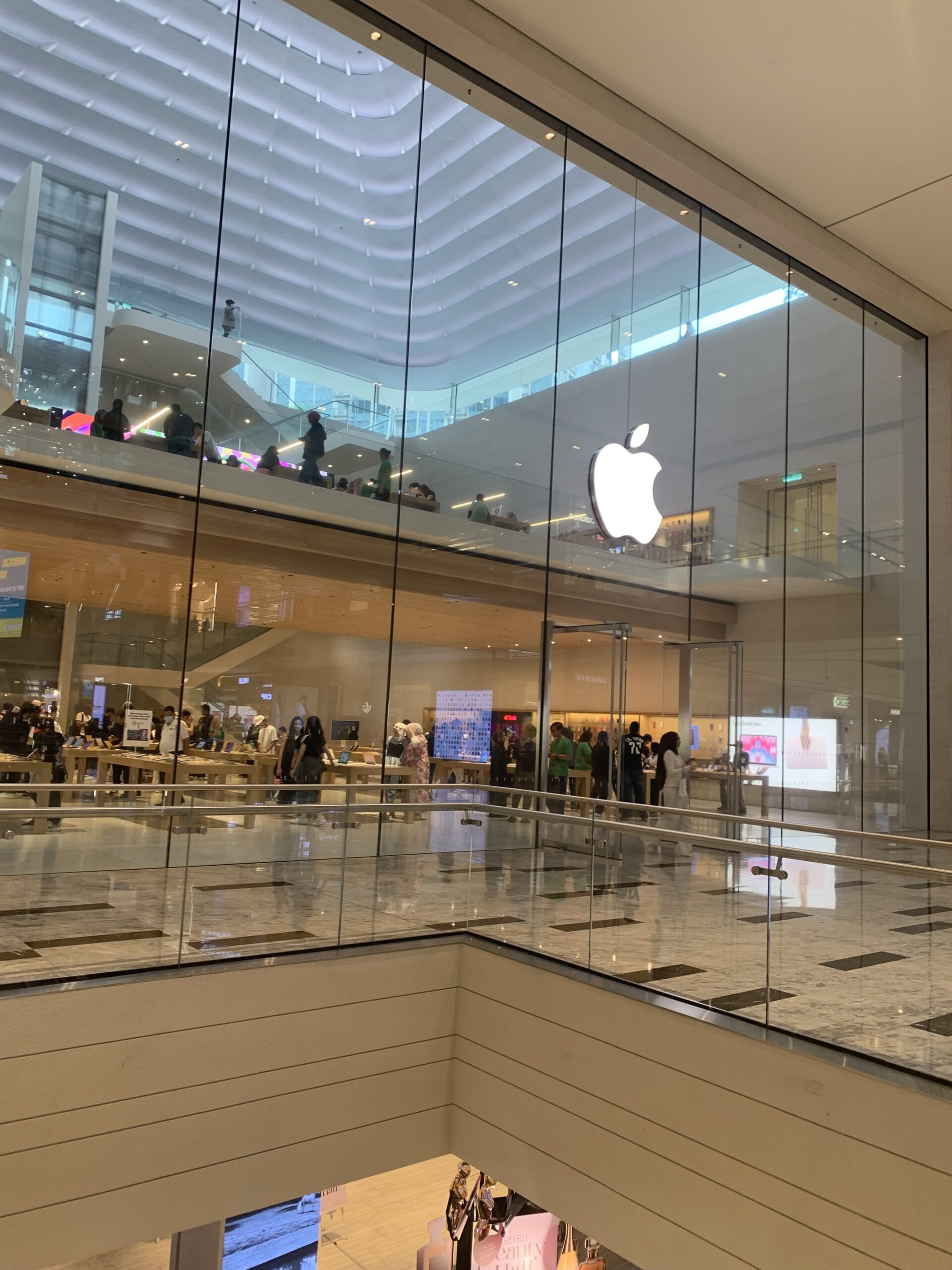

During five hours at Apple The Exchange TRX in Kuala Lumpur, I watched people buy premium technology almost as casually as they might order a cup of coffee.
It was a weekday, but the store hummed with a weekend crowd. Perhaps the mid-year school holidays explained part of it. Still, what struck me was not merely the number of people inside Malaysia’s first Apple Store.
It was the way many of them appeared to shop.
Customers approached staff with questions and requests. Some seemed ready to make their purchases without needing lengthy persuasion. The staff were not chasing reluctant shoppers or running through aggressive sales pitches. The buyers were already curious. Some looked as though they had arrived already convinced.
The products seemed to sell themselves.
I was there for a simple data transfer between my old phone and my new one. With five hours to kill, I became a quiet observer of this retail ecosystem.
The staff were undeniably impressive. Despite the relentless foot traffic, those I encountered were composed, patient and pleasant.
But the real force in the room was not the service. It was the invisible pull of the brand itself.
That pull became clearer when I thought back to my Grab ride to the mall earlier that day.
The driver had shared a painful chapter of his life. Driven by a passion for cooking, he had once invested a substantial amount in a restaurant business.
It did not last. Eventually, he faced the hard truth that pouring more money into the venture was merely funding a sinking ship. He chose to cut his losses and walk away.
Later in the ride, he spoke about a local omakase operator whose business, he said, was thriving.
The contrast stayed with me. Here was one man with culinary skills, raw passion and substantial capital whose business did not survive, while another appeared to thrive in one of the most premium segments of the dining market.
The driver believed branding had made a difference. His own bak kut teh venture, he said, had started with only a small allocation for branding.
Naturally, reality is more complicated. A single conversation during a Grab ride does not reveal the whole truth. Factors such as location, rent, pricing, margins, timing and operational execution could all have shaped the outcome. It would be unfair to draw a definitive conclusion from one person’s account.
Yet, sitting in the Apple Store hours later, his words echoed.
Why do some businesses have to work so hard for every single ringgit, while others appear to attract premium buyers with far less resistance?
A bak kut teh dish competes on taste, portion size, price and familiarity. It satisfies a daily hunger.
Omakase sells something different. Beyond the food, it offers curation, craftsmanship, exclusivity and experience.
Similarly, Apple is not merely selling a phone, a tablet or a laptop. It is selling design, familiarity, an ecosystem and the confidence many customers attach to its name.
Branding cannot rescue a bad product. Nor does a sleek logo guarantee commercial success.
But a good product is merely the baseline.
Before customers reach for their wallets, they must first be given a reason to desire what is being sold.