There is a cabinet near the entrance of my regular mall. I walk past it sometimes. It says AED above it — Automated External Defibrillator — with a red heart and a lightning bolt symbol that signals something urgent. I assume the device is inside.
I have never seen anyone open it.
I have also never checked whether the battery inside still works, whether the pads have expired, or whether anyone in the vicinity is actually trained to use it. I suspect most people who walk past it haven’t either.
This is not a criticism of the mall. Malaysia has been moving — rightly — toward wider AED placement in public spaces, with Selangor studying guidelines for new developments and public areas.
But here is the question I keep turning over: what about schools?
A child spends roughly six hours a day, five days a week, at school. Teachers are, by sheer daily proximity, the adults most likely to be present if a student collapses — whether from sudden cardiac arrest, a medical episode, or something nobody saw coming. And yet there is no equivalent mandate requiring AEDs in Malaysian schools. No policy. No allocation. The gap is not from a lack of caring. It is, honestly, a matter of money.
A single AED unit can cost several thousand ringgit, with some Malaysian suppliers placing typical prices roughly between RM5,000 and RM15,000, depending on the model and features. Then there is the maintenance — battery replacements, pad expiry, servicing — which adds up quietly over time. For most government schools operating on tight budgets, this is not a realistic line item. So the machines don’t come.
And here is where it gets uncomfortable: even where AEDs do exist — in malls, in lobbies, along highways — I wonder how many of us would actually reach for one. Panic is a strange thing. In a real emergency, the three seconds of knowing where the device is and the thirty seconds of remembering how to use it can feel very far away from any training session you may have attended two years ago. Muscle memory requires repetition. Most of us have had none.
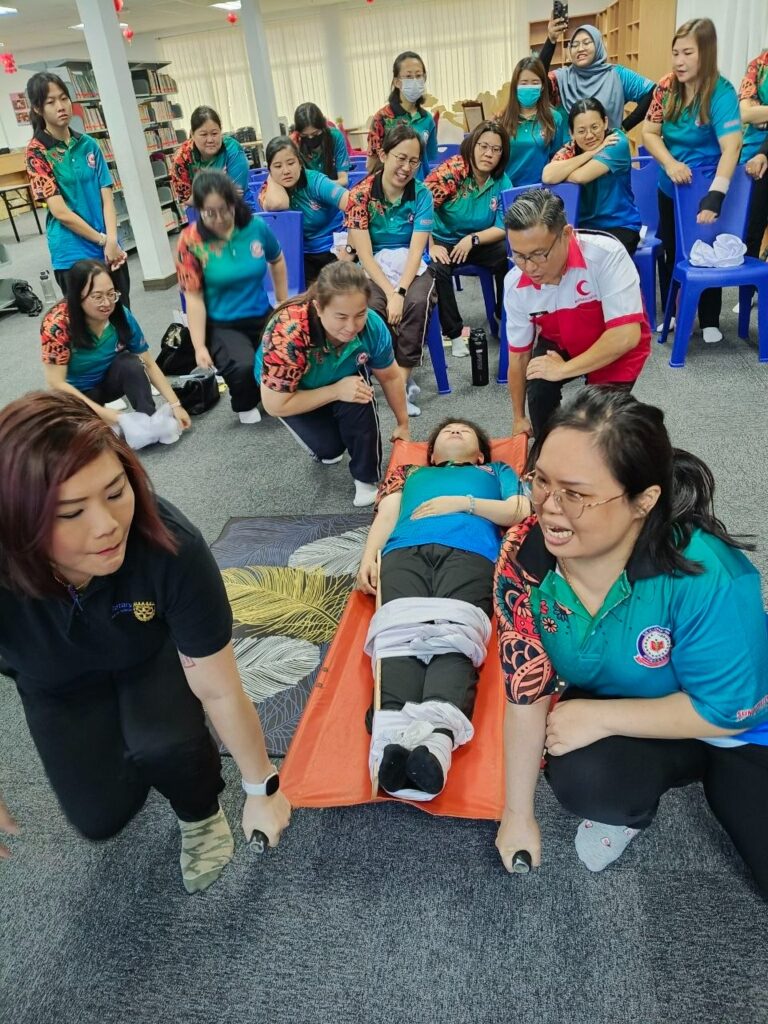
The gap is not entirely about equipment. It is also about whether people know what to do in the minutes before help arrives.
This is why I found myself paying attention when I came across what the Rotary Club of Tebrau (RCT) has been doing quietly in Johor Bahru.
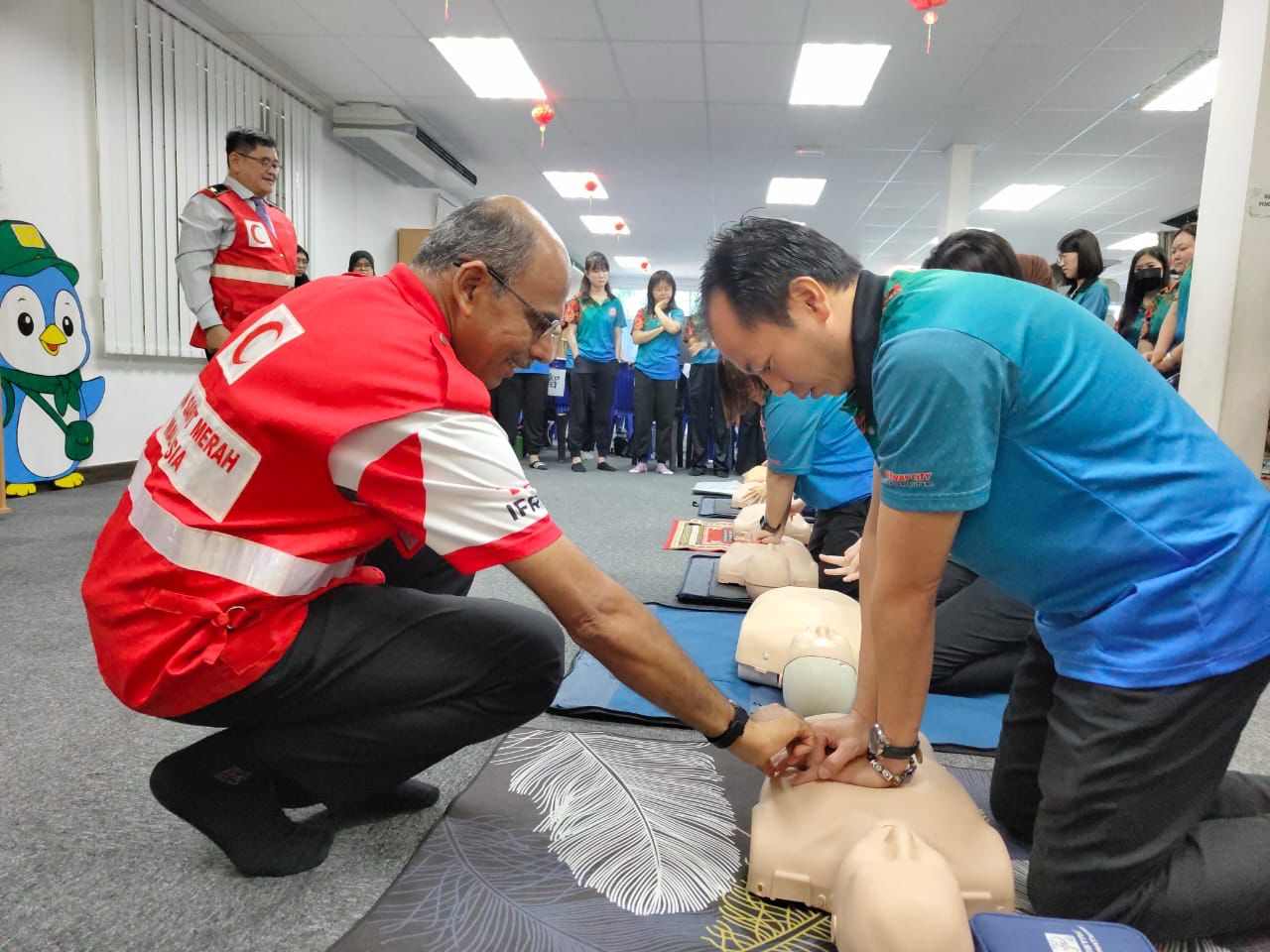
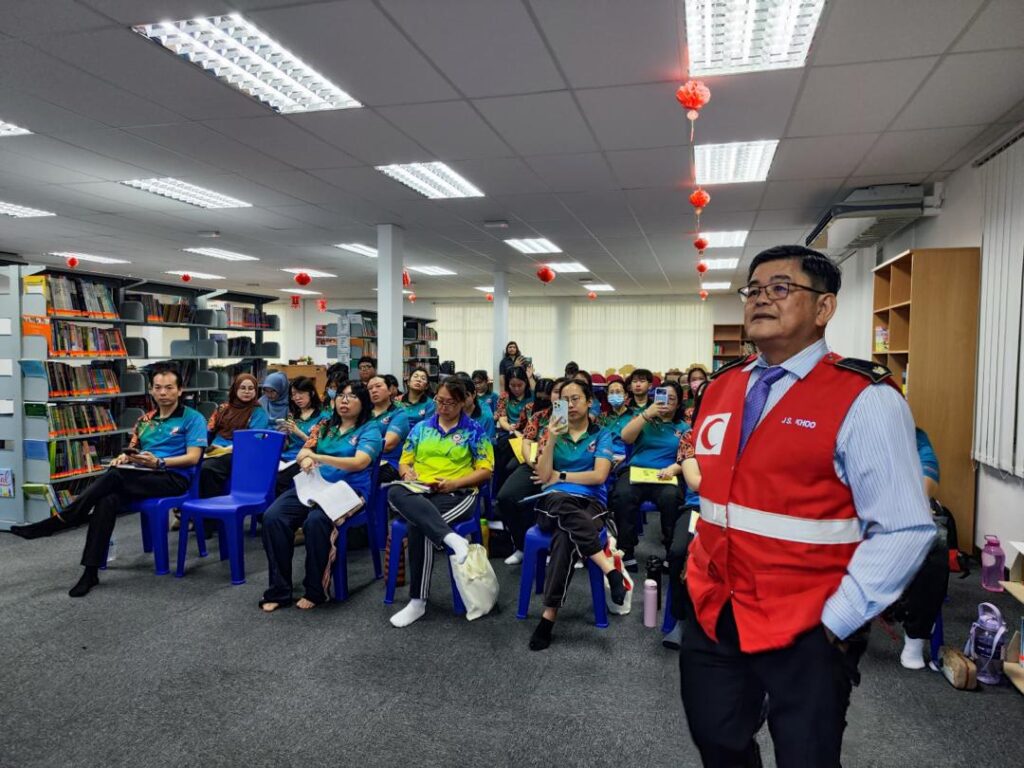
Rather than waiting for the AED funding question to resolve itself — which could take years — they are building the human infrastructure first. Since 2023, in partnership with the Malaysian Red Crescent Society Johor Bahru branch, they have been training teachers and school staff in CPR and AED use. Not a one-off event. A rolling programme, school by school, batch by batch. The most recent sessions were held at Sekolah Jenis Kebangsaan (Cina) Cheah Fah in Iskandar Puteri.
The logic is straightforward and, I think, rather wise.
An AED without a trained person nearby is just a box on the wall. But a trained person — someone who knows what to do, how to stay calm, and how to act in those first critical minutes — is already a first responder, with or without the machine.
If the machine eventually arrives, they will know how to use it. If it does not arrive yet, they are still better equipped than they were yesterday.
Dr A.R. Leenah Devi Rajah, who leads the RCT, put it plainly: “One minute of first aid can change a life, especially in a school setting where teachers spend the most time with students on a daily basis.” Teachers are the adults in the room. Training them is the most practical place to start.
I will admit I came to this story as an outsider. I am not a medical professional. I cannot tell you whether the AED in your mall lobby is in working condition, or who is responsible for checking it, or whether your school’s canteen aunty has ever done a CPR course. These are questions I genuinely do not know the answer to — and I suspect they are questions most of us have never thought to ask.
What I do know is this: cardiac arrest does not wait for the right location. It does not check whether you are in a mall, a classroom or a school field. And in Malaysia, where cardiovascular disease (CVD) is affecting people at younger ages — with the National Heart Institute (IJN) citing a 2019 study that found almost one in four CVD patients were below 50 — the odds that a teacher, a staff member, or a fellow student might one day need to act are not as remote as we would like to think.
The RCT cannot solve the whole problem alone. But it is doing something concrete, in a place where children spend most of their waking hours, with the people most likely to be standing there when it matters.
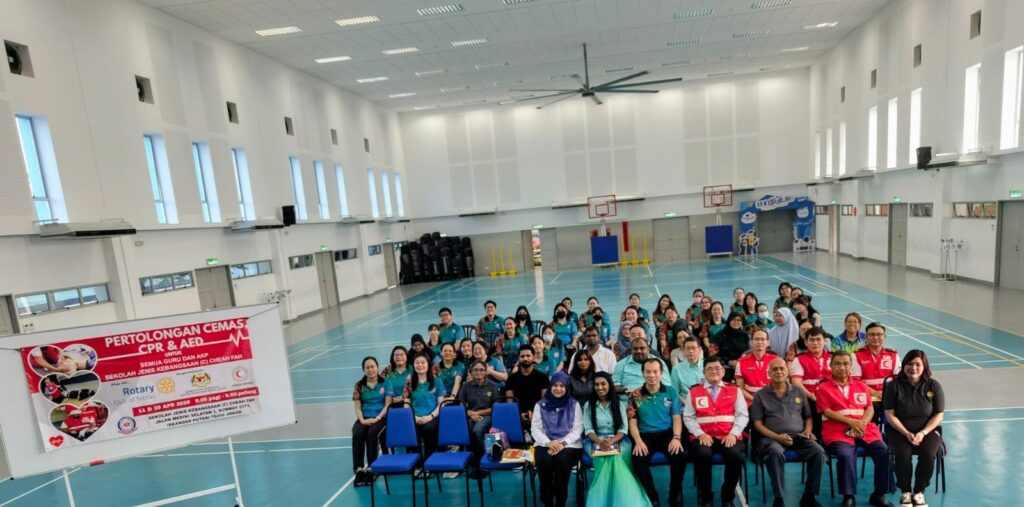
All photos courtesy of Rotary Club of Tebrau and Koh Yee Mei, the event organising chairperson and project organiser.
The news report on the CPR and AED training programme at SJK(C) Cheah Fah in Iskandar Puteri is on Newswav.