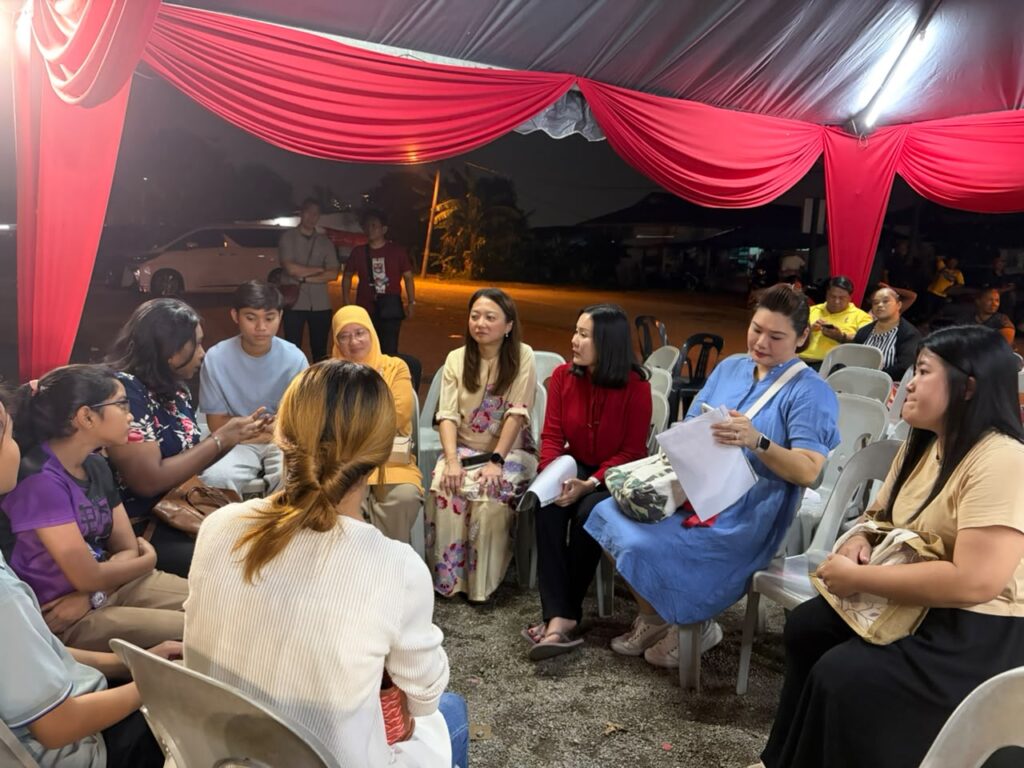
Hannah Yeoh, Minister in the Prime Minister’s Department (Federal Territories), meets mothers of children with Type 1 diabetes at Kampung Orang Asli Sungai Temon (Seletar). Photo: Roam With Bee
Under a tent at an evening community gathering in Johor Bahru, a small group of mothers sat down with Minister in the Prime Minister’s Department Hannah Yeoh to talk about children living with Type 1 diabetes.
Their concerns were practical and urgent. They included access to diabetes technology, school support, public awareness, and the daily burden of keeping a child safe.
Yeoh listened attentively and said she would raise the matter with the Health Ministry.
It was a small, unscripted moment — plastic chairs, a community gathering, not a press conference.
But for the mothers, being heard mattered.
Type 1 diabetes, or T1D, is a lifelong autoimmune condition. It is not caused by diet or lifestyle, is not preventable, and currently has no cure. Children with T1D need insulin to survive, but managing the condition goes far beyond injections.
Families have to monitor blood glucose levels, count carbohydrates, calculate insulin doses, adjust for meals and physical activity, and remain alert to medical emergencies every day.
For parents, that responsibility does not stop when a child goes to school, joins a sports activity or even at bedtime.
K. Kanageswary was among the mothers present.
She used to work as a security officer in Singapore, but when her daughter was diagnosed with T1D three years ago, she had to leave that job to care for her.
“When I was working in Singapore, I had to leave my house at 4.30am and would only be back home at around 10.30pm,” she later shared with me.
“My daughter’s condition needed me to take care of her, so I quit the job and found a job in Johor Bahru which gives me more time to care for her, but the salary is a challenge for someone managing her condition.”
For Kanageswary, practical assistance would make a difference.
“It would really help if the government could help by distributing vouchers for buying relevant medical supplies,” she said.
The financial burden can be heavy for families managing T1D.
In a paper prepared by Frederick Yap’s mother and shared with me, families highlighted the cost of blood glucose test strips, ketone strips, needles, Continuous Glucose Monitoring sensors, insulin pump consumables and emergency glucose supplies. The paper also noted that an insulin pump can cost about RM30,000, while CGM-related costs may range from hundreds to a few thousand ringgit a month, depending on the system and supplies used.
The mothers also raised the need for better school-based support.
Children with T1D may need to eat, drink water, check their glucose levels, take insulin or rest when their blood sugar is out of range. But when teachers or school staff are unfamiliar with the condition, these needs can be misunderstood.
This is why awareness matters.
A child asking for a snack may not be seeking special treatment.
A child who suddenly looks tired, emotional or unfocused may not be misbehaving.
A child who needs to pause may simply be trying to stay safe.
For families living with T1D, support is not only about hospital appointments. It is also about classrooms, sports fields, tuition centres and community spaces understanding what the condition requires.
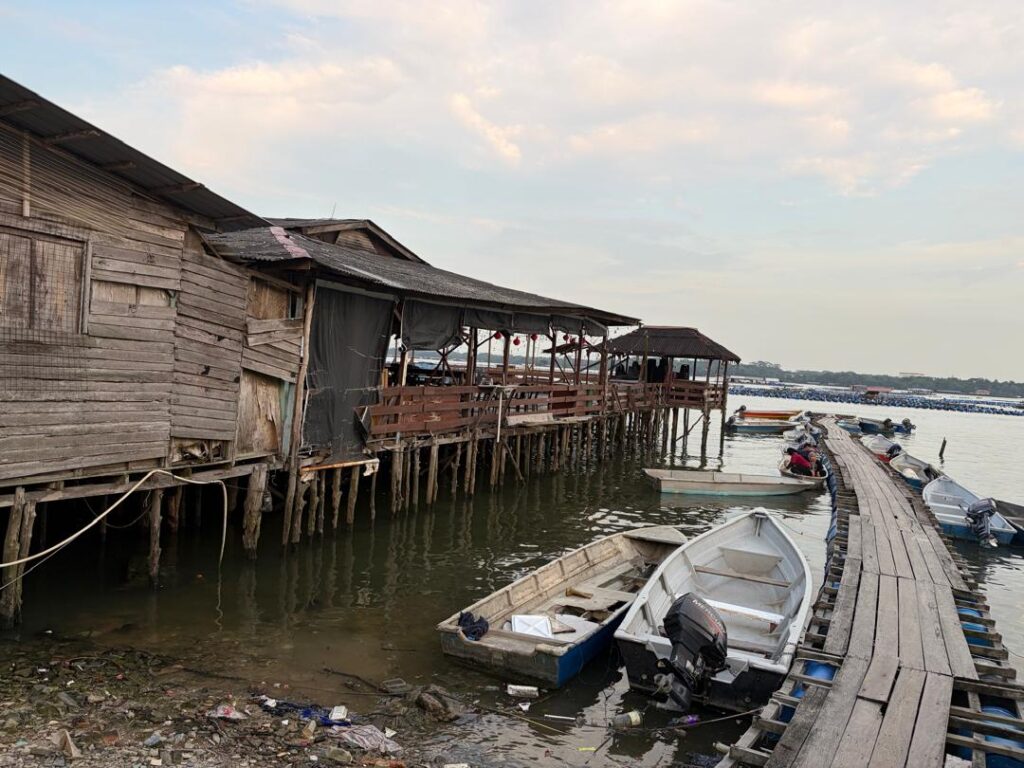
Kampung Orang Asli Sungai Temon, a Seletar fishing community facing growing pressure from coastal development, pollution and declining fishing grounds. Photo: Roam With Bee
The setting itself had its own story
Yeoh met the mothers at Kampung Orang Asli Sungai Temon, a Seletar fishing community. The kampung is no stranger to outside visits. Volunteers from Pertubuhan Kebajikan Pelita JB have worked with Cornerstone International School to bring education support to children in the community.
It is one small, steady effort in a kampung still facing a much longer struggle over land, pollution and a fishing livelihood increasingly squeezed by coastal development.
That evening, two different concerns shared the same space.
One was about an indigenous fishing community trying to protect its home and way of life.
The other was about mothers trying to protect children living with a lifelong medical condition.
Both were asking for the same basic thing: to be seen, heard and supported in practical ways.
For the mothers of children with T1D, Yeoh’s willingness to listen was not the end of the journey.
But it was a start.
And for families who live with the condition every day, even a start matters.
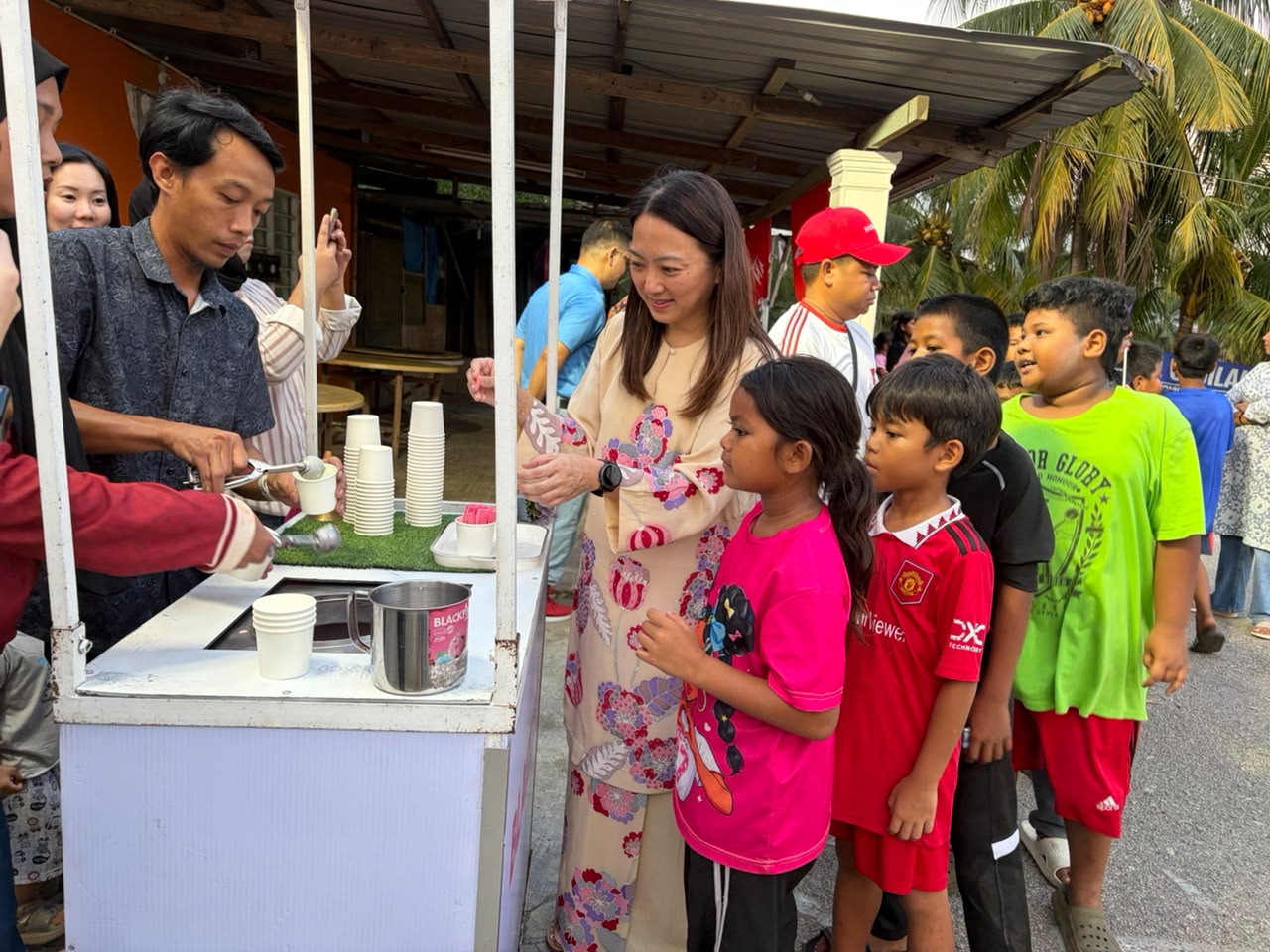
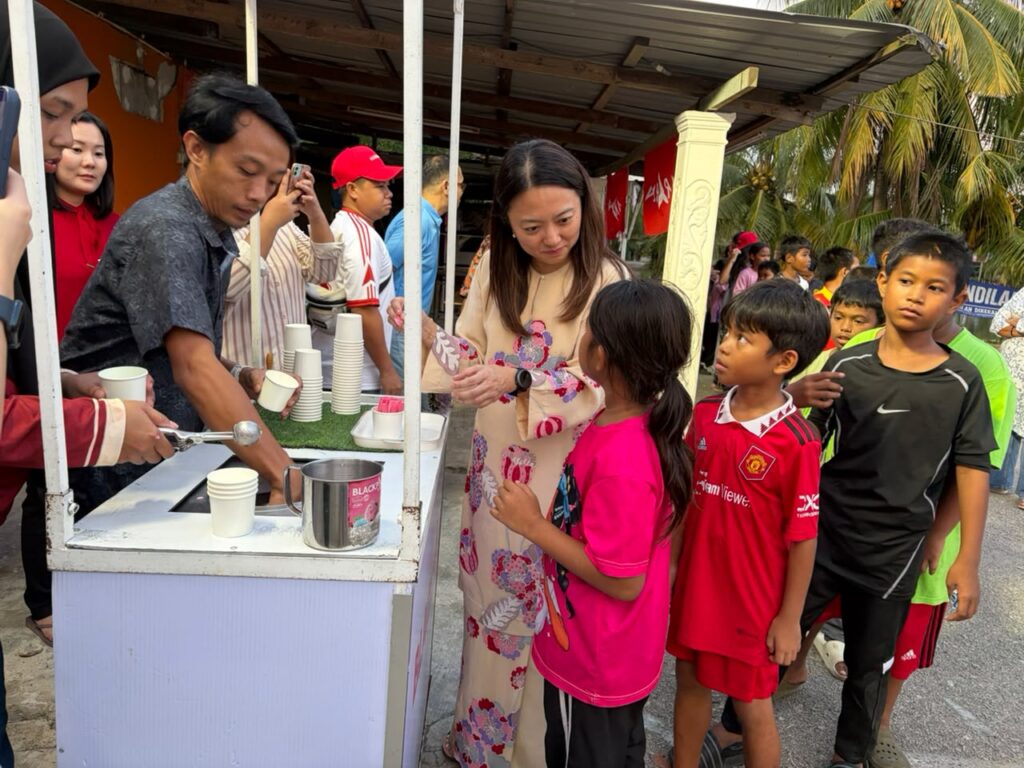
Ice cream for the kids of Kampung Sungai Temon, handed out by Yeoh. Photo: Roam With Bee
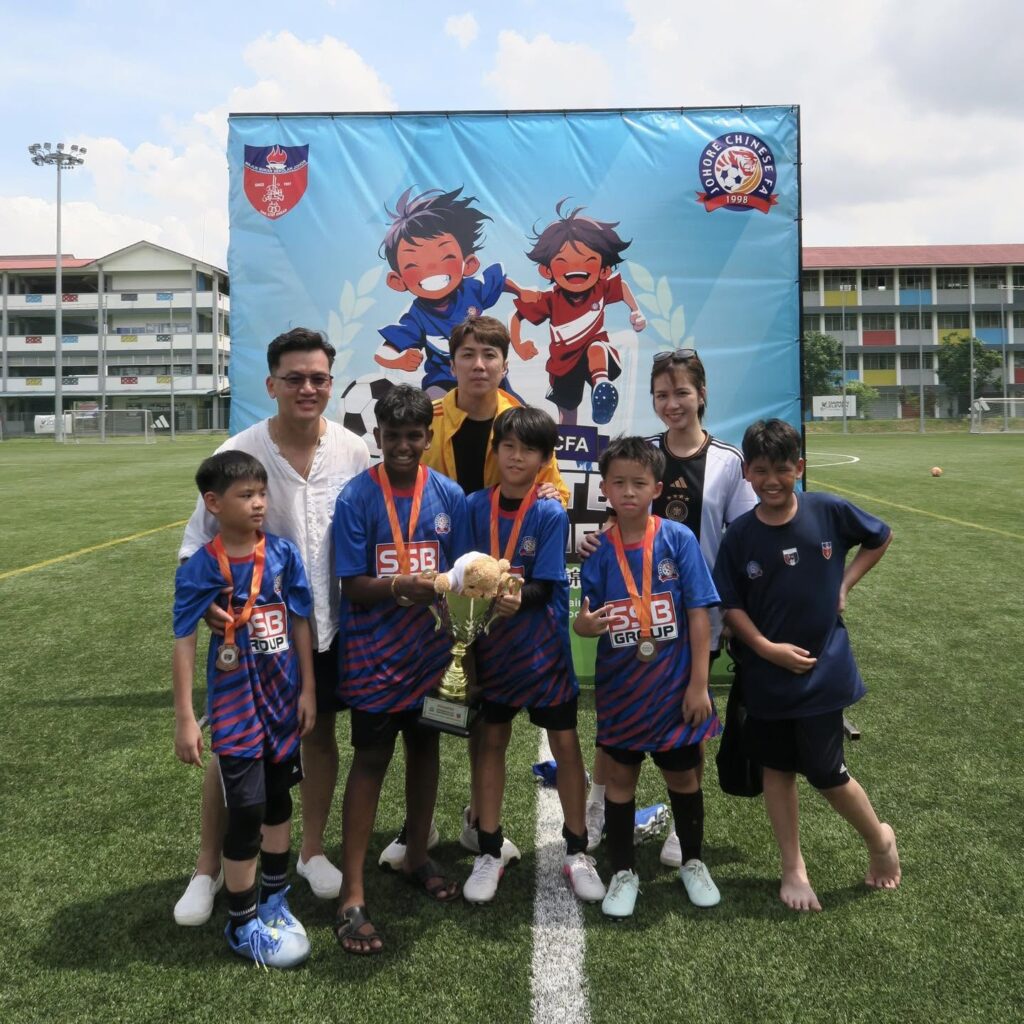
Frederick Yap (left) with his teammates, coaches, and supporters after a school football tournament in Johor Bahru. Photo: Falcon Knight United FC
When Frederick Yap first joined Falcon Knight United FC in 2022, his coach did not see Type 1 diabetes.
He saw a cheerful, positive child who was relentless when chasing the ball.
He saw a good defensive player.
“Honestly, it was a surprise to me, as Frederick is always the most energetic one,” said the coach.
That surprise matters.
Type 1 diabetes is not caused by diet or lifestyle. It is not preventable, and there is currently no cure. Children living with the condition need insulin to survive, but managing it goes far beyond injections.
Every day, families have to monitor blood glucose levels, count carbohydrates, calculate insulin doses, adjust for meals and physical activity, and stay alert for emergencies.
On a football pitch, that means the adults around a child need to know when something is not right.
“We have adjusted to have more awareness and attention to Frederick’s behaviour,” the coach said.
He now watches not just Frederick’s movement on the field, but also his expression and behaviour. A sudden change could mean that Frederick’s blood sugar is too low or too high, and that he needs attention.
That is not the same as treating him as fragile.
Frederick’s parents do not want him to be pitied. They want him to be accepted, supported and allowed to participate like other children.
This is where the coach’s role becomes important.
A child who needs water, food, a glucose check, insulin, or a short rest is not being difficult. He may simply be doing what is necessary to stay safe.
A child who suddenly looks tired, emotional or less focused may not be misbehaving. His blood sugar may be out of range.
The need for awareness goes beyond one football team. In a paper prepared by Frederick’s mother and shared with me, she noted that children with T1D can face challenges in school because many educators remain unfamiliar with the condition.
This can lead to misunderstandings during low-blood-sugar episodes, or restrictions on essential self-care activities such as eating, drinking water, checking blood glucose or taking insulin.
The same awareness is needed in sports clubs.
Children do not leave Type 1 diabetes at home when they go to school, tuition, football training or a tournament. Their condition follows them into every classroom, field and changing room.
At Hospital Sultanah Aminah in Johor Bahru alone, about 70 children and adolescents are being followed for Type 1 diabetes care. That number may sound small, but for each family, the responsibility is constant.
The financial burden is also heavy. The paper noted that an insulin pump can cost about RM30,000, while CGM systems may cost anywhere from RM600 to RM2,500 a month, depending on the system and supplies used.
Technology can help. But awareness still matters.
A sensor can alert a family. A parent can carry supplies. A child can learn to speak up.
But in the moment, the adult standing closest to the child — a teacher, coach, trainer or organiser — may be the person who notices first.
That is why Frederick’s coach supports more awareness and training.
He has also worked with players with autism and severe attention-deficit hyperactivity disorder (ADHD).
“We have always given our best, because football is for everybody,” he said.
For this coach, inclusion is not a slogan. It is something that happens in small decisions.
Letting a parent step in when needed.
Watching a child more closely without embarrassing him.
Understanding that support is not special treatment.
Allowing a child to pause, recover and return.
Frederick’s story is not only about football. It is about what happens when the adults around a child are willing to learn.
His coach did not know at first.
Then he watched Frederick play.
And now he watches differently.
Not with pity. With awareness.
That may be the first step towards making more schools, clubs and community spaces safer for children living with Type 1 diabetes.
Because childhood should not stop at diagnosis.
And football, as the coach said, is for everybody.
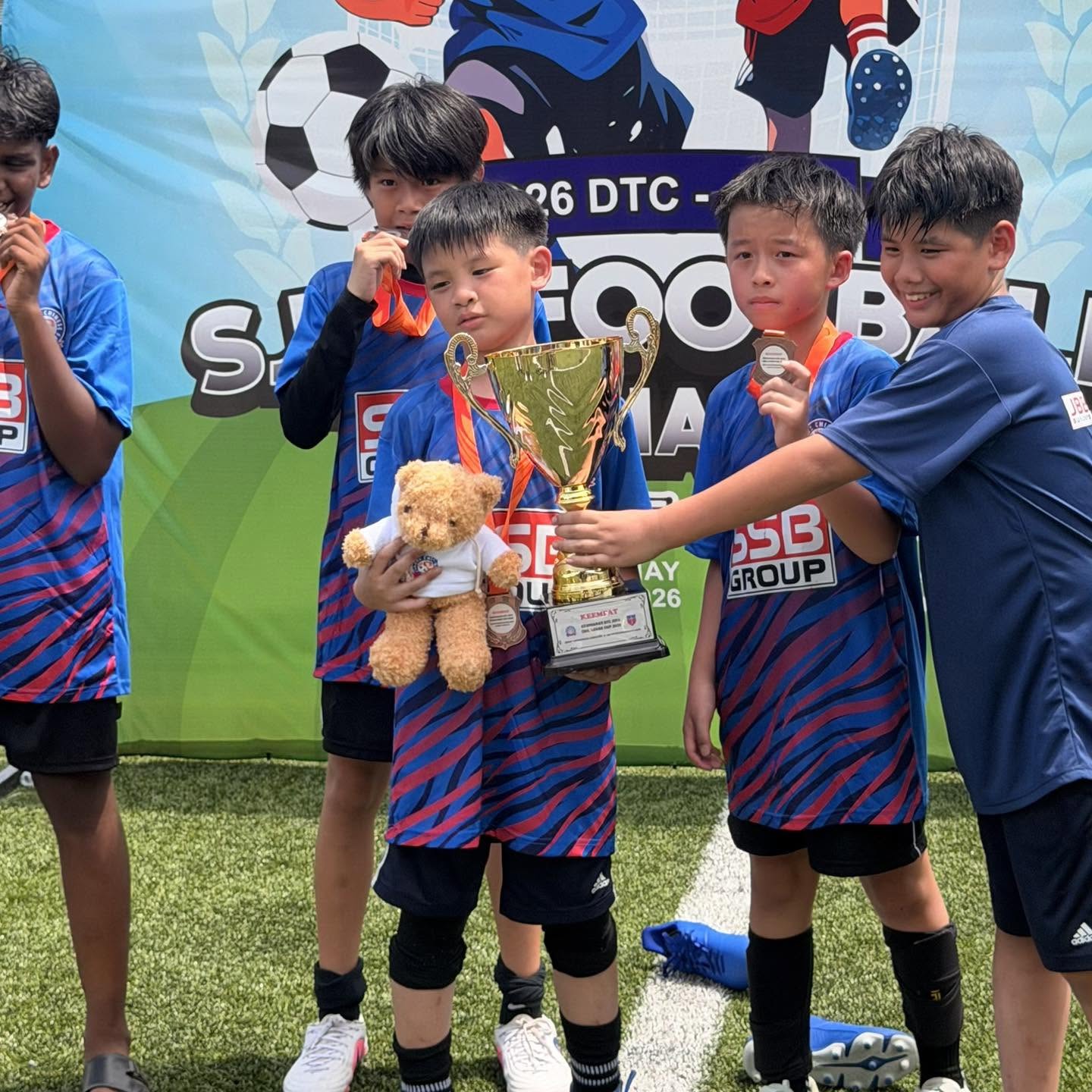
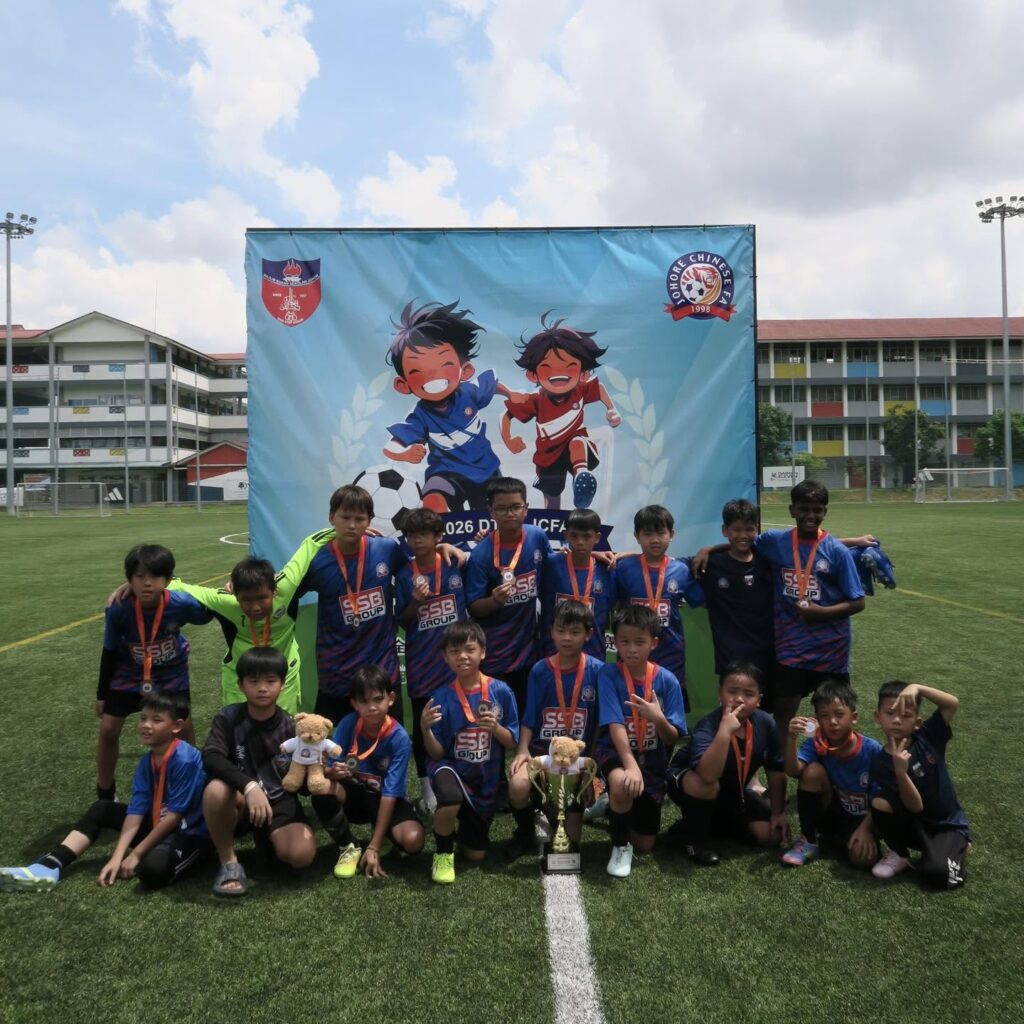
The children who love football, after a tournament where Frederick and his teammates finished fourth. Photo: Falcon Knight United FC
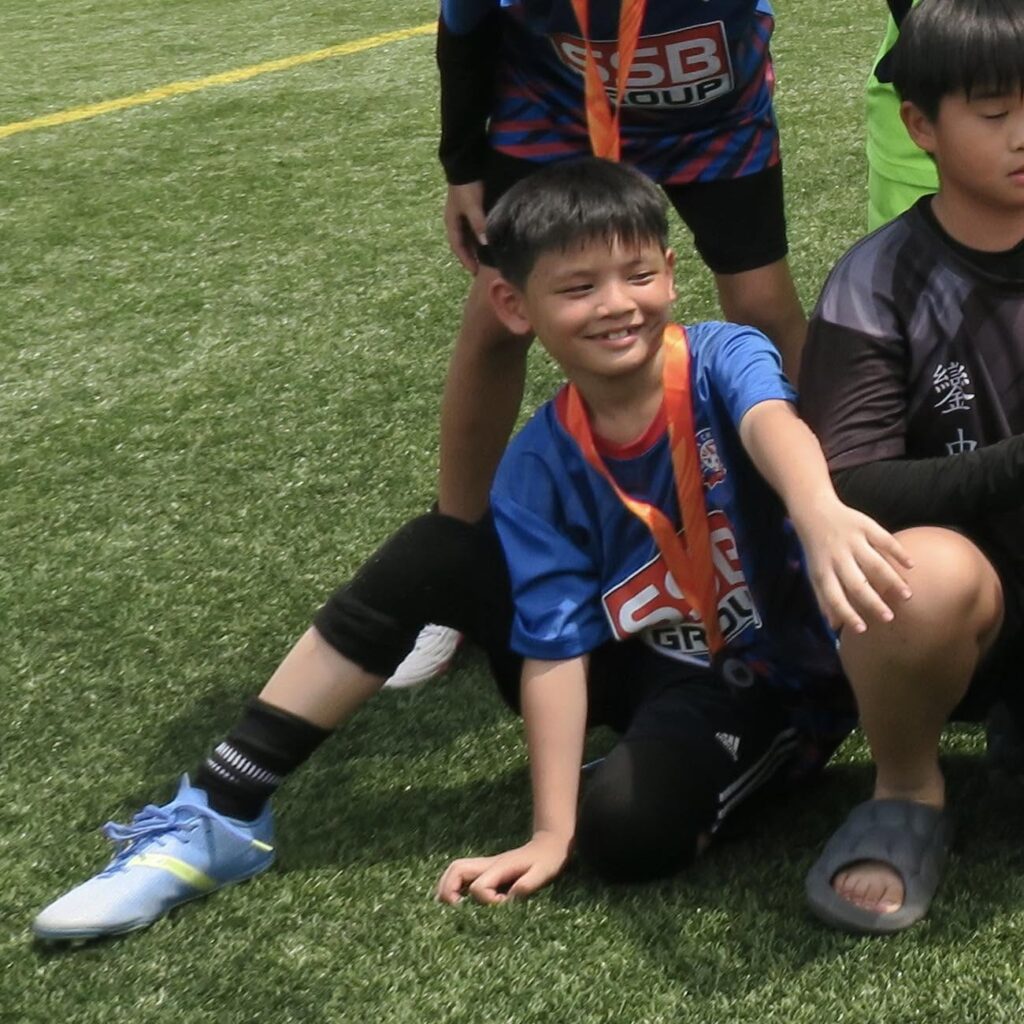
Frederick’s dream of returning to football came true when his team finished fourth in a friendly tournament organised by Johore Chinese Football Association for schools state-wide. Photo: Falcon Knight United FC
On a football pitch in Johor Bahru, Frederick Yap had a job to do.
Playing defensive midfield, he stood just in front of the defenders, where the work is not always glamorous but almost always important. His role was to pressure, disrupt, track advancing opponents and break up attacks before they became dangerous.
It was a position that demanded stamina, strength, composure and positional intelligence.
For Frederick, it was also something more.
The nine-year-old was returning to the pitch after almost two years away, having been diagnosed with Type 1 diabetes in April 2024. He had stopped training and playing immediately after his diagnosis. But according to his parents, his natural sporting ability had not disappeared.
Football was not new to him. Neither was movement. He had always shown a flair for physical activities, from football to skateboarding, picking things up quickly and fearlessly.
To anyone watching from the side, he may have looked like any other active, bright and determined child on the field.
But for his parents, the match was never just a match.
It was also glucose levels, insulin, snacks, hydration, ice packs, emergency supplies and the constant calculation that comes with caring for a child whose blood sugar can change within minutes.
His mother put it plainly: “Type 1 diabetes does not take a break.”
That sentence stayed with me.
Because childhood should be allowed to run. It should be allowed to sweat, compete, laugh, fall, get back up and try again. But for families living with Type 1 diabetes, every ordinary activity carries an extra layer of planning.
Before the tournament, Frederick’s parents had to think about what many parents never have to consider. Would he have enough snacks in case his glucose dropped? Would there be enough fluids to keep him hydrated? How would they keep his insulin cool under the hot sun? How would his body respond to intense activity?
Exercise can make the body more sensitive to insulin and cause glucose to be used up faster. For a child with Type 1 diabetes, that means sports can sometimes cause blood sugar to rise or fall unexpectedly. Even after exercise, insulin sensitivity may remain elevated for several hours, raising the risk of night-time lows.
So his parents prepared.
They carried snacks. They carried insulin. They carried glucose. They monitored his levels. They watched for signs. They calculated, adjusted and stayed alert.
At one point during the two-day tournament, keeping the insulin cool under the hot sun became such a concern that the family had to drive to a nearby 7-Eleven to buy a whole bag of ice.
The ice was meant for the insulin.
By the end of the day, it had become useful for the children too. Other young players came over asking for ice cubes to cool down their bodies and drinks.
It was a small scene, but it said a lot.
Sometimes care looks like a parent standing quietly at the sidelines. Sometimes it looks like a bag of ice. Sometimes it looks like planning so carefully that a child gets to feel like every other child.
That, perhaps, is the heart of Frederick’s story.
His parents do not want him to be treated as fragile. They do not want pity. They do not want his condition to become the first thing people see.
They want him to be accepted, supported and understood.
During the tournament, only the coaches were aware of his condition. His teammates did not necessarily know. To them, he was simply Frederick — a boy who loved football and wanted to play.
The coaches allowed his parents to step into the dugout when needed to check his glucose level through a continuous glucose monitor (CGM). Apart from that, he was judged by the same things that matter in sport: performance, character, attitude and effort.
That kind of support matters.
Not because children with Type 1 diabetes need to be wrapped in cotton wool, but because they need adults around them to understand what the condition requires.
There were difficult moments. His family said there were times when Frederick had to stop playing because his blood sugar was too low or too high. For a parent, it is heartbreaking to watch your child sit out while teammates continue.
But it is also necessary.
The challenge is not only physical. It is emotional too. A child has to learn that taking a short break does not mean he is weak. It does not mean he has failed his team. It is simply part of living with Type 1 diabetes.
And each time Frederick returned to the field, he showed something important: with preparation, support and determination, children with Type 1 diabetes can still take part in sports and chase their goals.
His team finished fourth.
But the more meaningful achievement may not have been the placing. It was the return.
It was a child stepping back onto the field after a diagnosis that could easily have frightened a family into saying no. It was parents choosing not to let fear become a cage. It was a reminder that illness may change the way a family plans, but it should not be allowed to take away a child’s right to play.
Still, Frederick’s story also raises a wider question.
How much of this burden should families have to carry alone?
His parents believe there is still not enough awareness about Type 1 diabetes in schools and the wider community. Many people still do not understand that Type 1 diabetes is an autoimmune condition. It is not caused by eating too much sugar. It is not contagious. Children with Type 1 diabetes are not naughty, weak or difficult. They simply need insulin to survive and support to manage their blood glucose safely.
Frederick’s family is not alone in this. But just how many Malaysian families share this experience? The numbers are not easy to pin down.
A BERNAMA commentary by consultant physician, endocrinologist and diabetologist Dr Chooi Kheng Chiew, citing the Ministry of Health’s National Diabetes Registry Report 2023, said 289 individuals under 18 were recorded as living with diabetes in Malaysia. The same commentary noted that paediatric cases, especially Type 1 diabetes, are often not captured in adult-focused systems, which means the real number is likely higher. It also cited International Diabetes Federation data stating that 977 Malaysian children and teenagers under 18 had been diagnosed with diabetes—a figure that includes both Type 1 and Type 2 cases.
For families like Frederick’s, the data gap matters. If children with Type 1 diabetes are not clearly seen in the numbers, their needs may also be less visible in schools, sports and public support systems.
For some families, the gaps in support are not just inconvenient—they are exhausting. What would it look like if Malaysia had a dedicated foundation for Type 1 diabetes? Not just a charity that writes cheques, but one that builds systems: training for teachers, subsidies for CGMs, and a community for families who often feel they are managing this alone.
Access is not only about awareness. It is also about continuity of supplies, affordability and the tools families need to manage the condition safely.
This is where the conversation becomes bigger than one football match.
Malaysia does not lack diabetes awareness entirely. But Type 1 diabetes in children is specific enough, misunderstood enough and demanding enough that families may need a clearer platform of support — especially when it comes to schools, sports, CGM access and public understanding.
For schools, the needs are not complicated, but they are important.
Teachers and coaches should know the signs of low and high blood sugar. They should understand why a child may need to drink water, go to the toilet, eat a snack, check glucose levels or rest for a while. They should know that a child who cannot concentrate may not be misbehaving. His blood sugar may simply be out of range.
Classmates and other parents also need awareness.
A child should not be teased for wearing a CGM. He should not be made to feel strange for taking insulin or eating during class when medically necessary. He should not be excluded from sports or activities because the adults around him are unsure what to do.
Understanding does not mean lowering expectations.
It means making participation safer.
It means allowing a child to be a child.
For some families, managing T1D can cost hundreds of ringgit a month. Frederick’s parents said the financial burden rises sharply for those who rely on diabetes technology. An insulin pump can cost about RM30,000 upfront, while CGM sensors can cost about RM600 a month. With tubing and related supplies, they estimate that the first-year cost for a child using both an insulin pump and CGM can approach RM50,000. The recurring cost may be lower after the initial pump purchase, but sensors and consumables still need to be replaced regularly.
Frederick’s message to other children with Type 1 diabetes is simple: “Don’t be afraid. You’re not alone.”
It is the kind of sentence adults would do well to take seriously.
Because children should not have to be brave alone. Their parents should not have to educate every room from scratch. Schools should not wait for an emergency before learning what Type 1 diabetes means.
What families like Frederick’s need is not sympathy. They need a clearer support system.
For some, that could mean a dedicated Type 1 Diabetes foundation — one that advocates for CGM access, trains teachers and coaches, and connects families so no one has to navigate this alone.
A support system would not remove the burden of Type 1 diabetes. But it could ensure that preparation and understanding are not left to chance.
Because a child’s safety on the field should not depend only on what his parents remember to pack.
It should also depend on the adults around him knowing what to do.
Most of all, it should allow him to play.
Author’s note: The family featured in this story has given permission for their experience to be shared. Some details have been included with their consent. The data cited from the Ministry of Health and International Diabetes Federation is accurate as of the time of writing.
Frederick’s dream of returning to football came true when his team finished fourth in a friendly tournament organised by the Johore Chinese Football Association. Photo: Falcon Knight United FC